Oh Winch my Lovely, part 2.

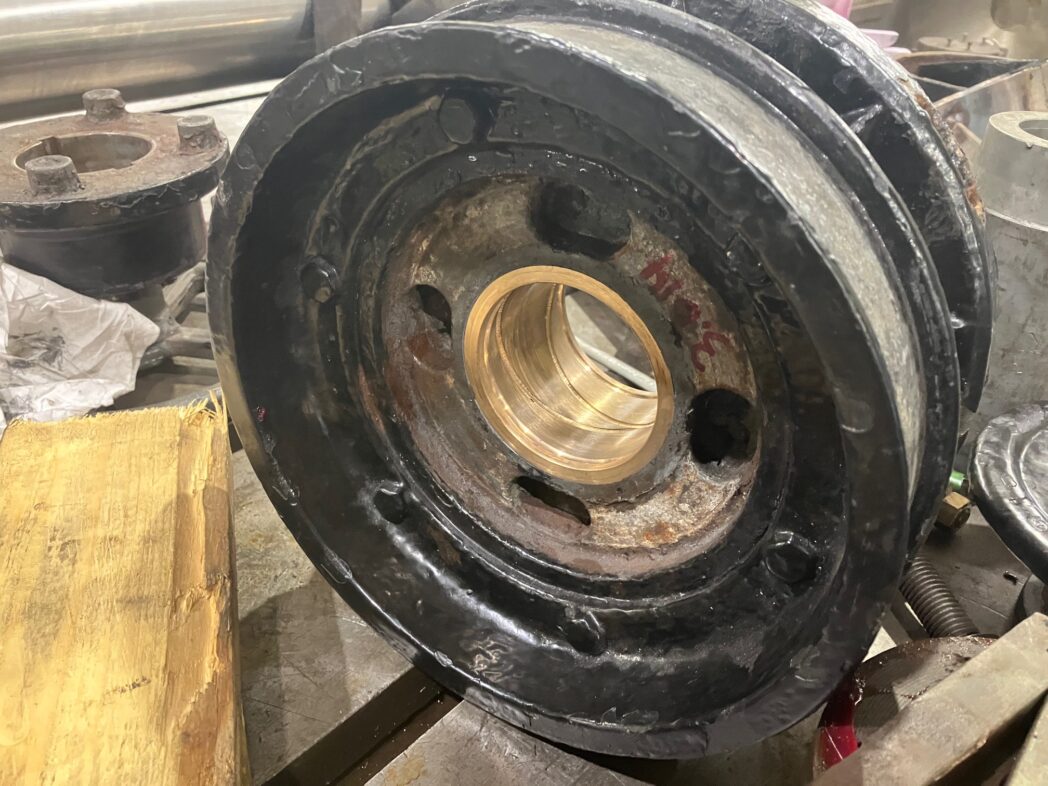
In early March, when the COLUMBIA III was just about ready to get pulled out for her annual underwater maintenance and I stopped at the machine shop. They were completing the final reassembly. Here is the old starboard chain wildcat with new babbitt bearing installed.
. . .  new modern hydraulic motor . . .
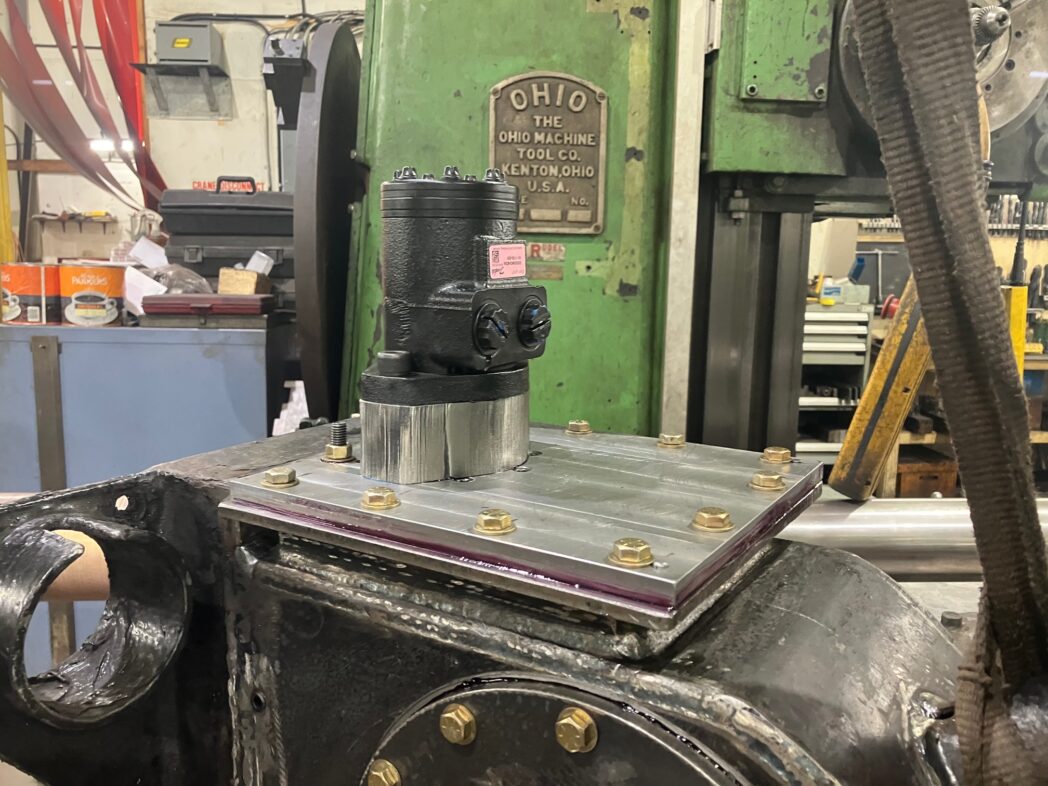
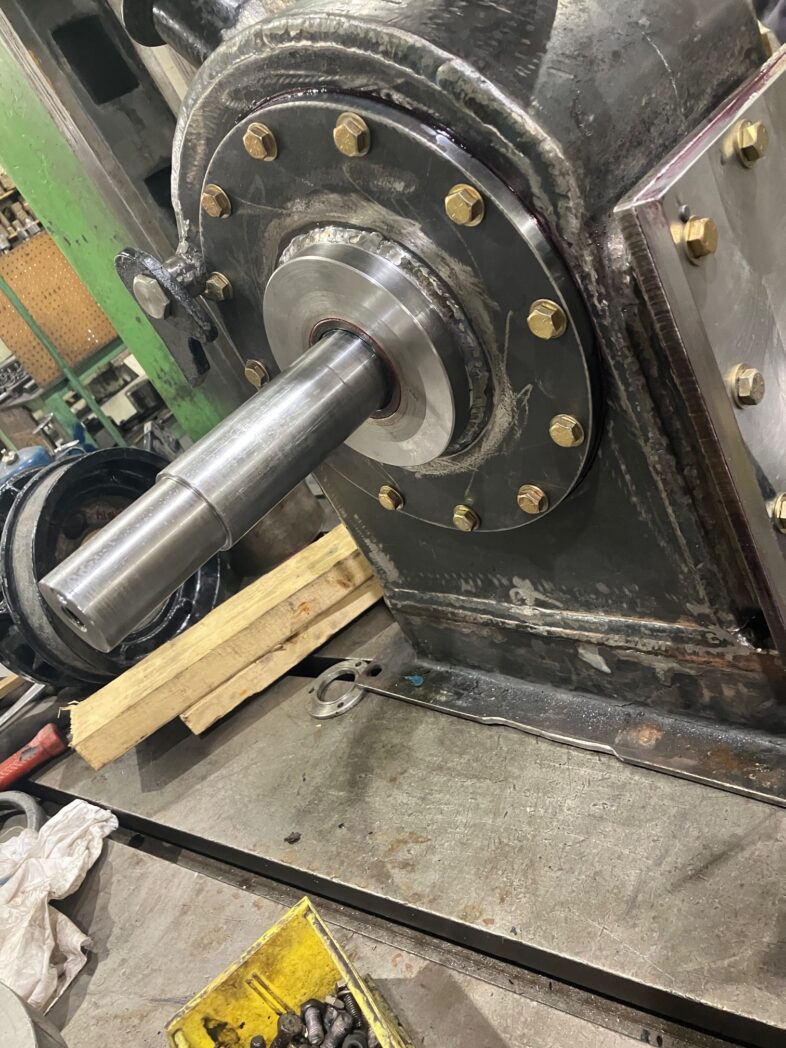
. . . new main shaft which both winch drums ride on . . .with the new machined end-plate mating perfectly with the new machined housing . .
And then the big day arrived. With the COLUMBIA III on the hard it was easy for the crane truck to place the over-hauled winch directly onto the front deck. So much easier than loading into a skiff, transporting it home and then having to come-along it onto the front deck with the tackle hanging from the rafters of the boat shed!!
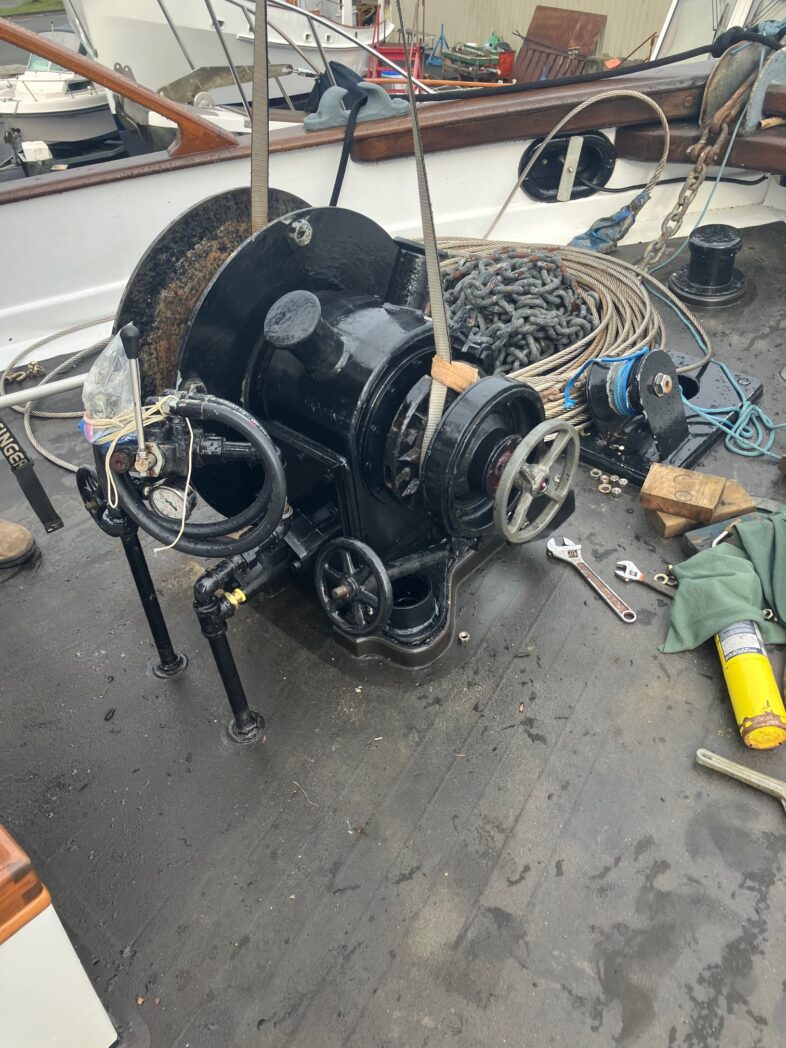
It lowered so easily into place!
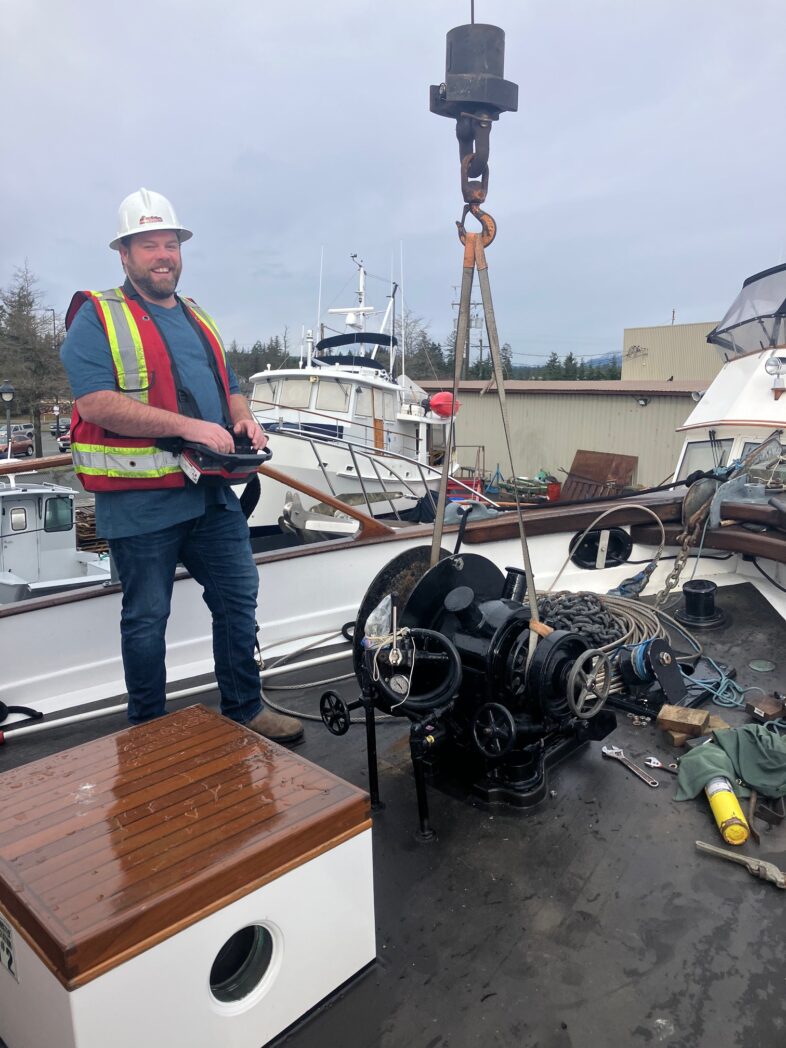
And then we spent 10 days on the hard . . .  then tested the winch by anchoring for lunch on our way home and then the ship sat in her boat shed for a couple of weeks before the big April Sand & Paintathon began . . .

. . .

. . .

. . .

But you know . . . . you really do know!

My dear Lovely needed just that little, teeny, weeny, extra bit of TLC before she could settle down for the next 70 years of trouble free operation  . . . .

After the winch had been installed on the front deck for a few weeks we began our sanding and painting . . .  and Nadya came to me and said, “Ross, there is oil on the front deck . . . ”  And I casually brushed off her concern (Patriarchally? Dismissively? Rudely?) and said, “Yes, yes, I am aware of the issue, we’ve done a lot of work on the winch this winter and its a bit messy. It’s no big deal . . .”

Yes, yes, my Instant Karma was winding up to clobber me!

About an hour later, chance would take me to the front deck and it was a freaking oil spill disaster! Well, maybe 3-4 liters of oil on my pristine deck!!!!

Oil on the decks and hull is seriously sub-optimal during painting . . . paint doesn’t stick to oil.

I called the machinist and of course he was surprised and we devised a solution. The new gear box was mounted to the new housing and the machined tolerances should have been fine enough to not require a gasket . . . but I guess it DID require a gasket.

It was with a heavy heart . . . . (read “very grumbly”) that I drained the winch-housing of its oil, dissembled part of the standing hydraulic valving, and removed the new gearbox. I was not supposed to be inside this contraption for the next 70 years.
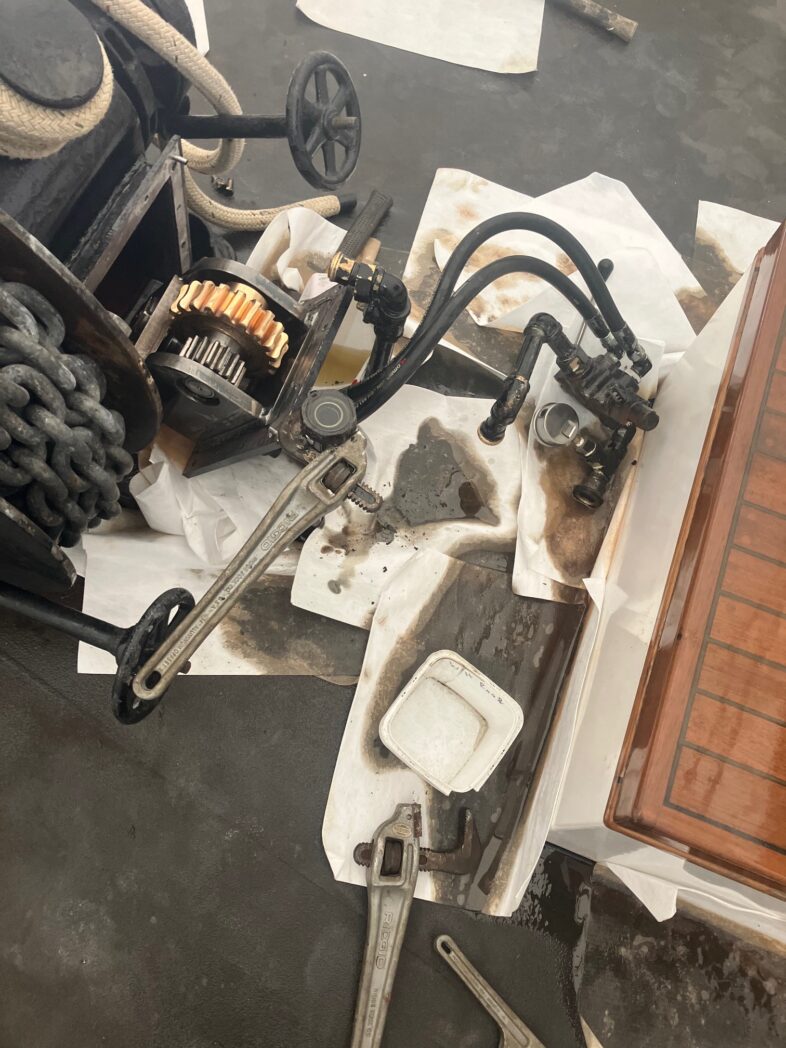
But I did get to see the incredibly heavy duty new gearing in the gear case which was already assembled when I last saw the winch back in the shop. 
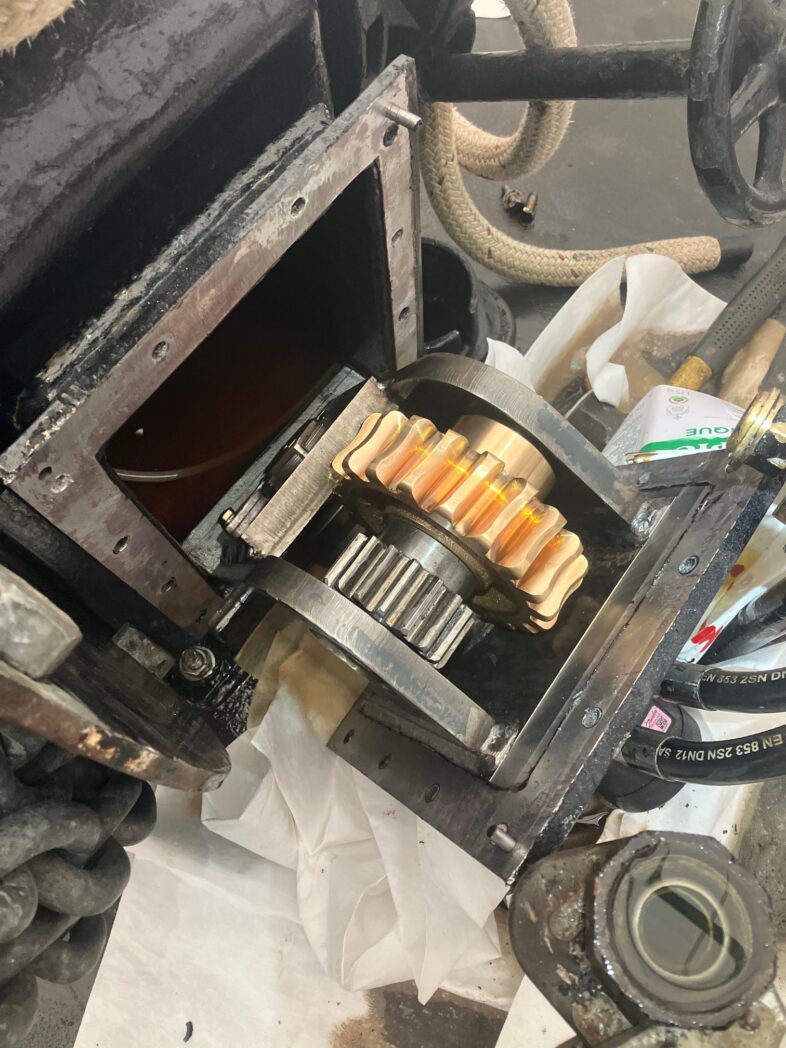
Here is a glimpse of the old, damaged bronze drive gear sitting alongside the new, more robust gear.
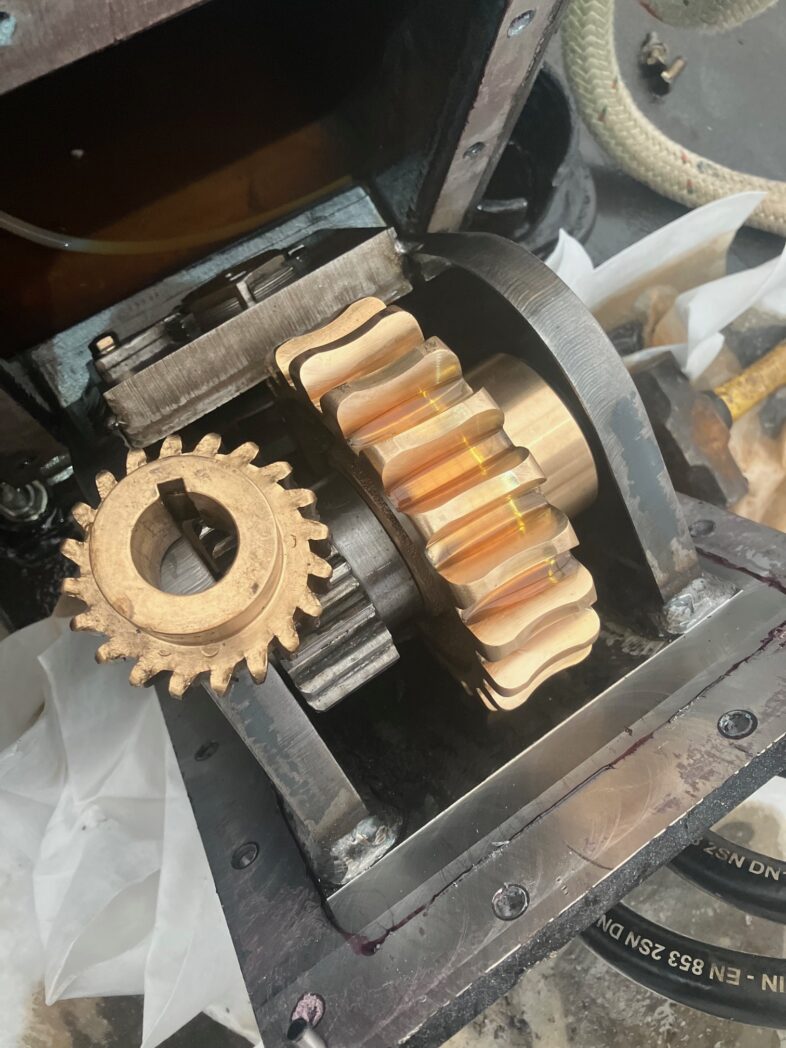
I then created a new 9″ x 11″ paper gasket, cleaned all the surfaces with brake cleaner fluid, and gooped the faces with oil resistant gasket sealant and reassembled.

I was pretty grumpy when it was all done.


Ok, ok, my Lovely . . . I do not want to think about you, nor write about you, nor take photos of you . . .  except for one. In April 2096 I will make an entry in this blog with one photo of you gracing the front deck of the COLUMBIA III. The caption will be “Dear Lovely, Thanks for the 70 years of impeccable service.”


2026 Shipyard!!

Well, before we pulled the ship out of the shed I was “moving the needle forward” on some random details . . .yes, my life is long string of random details.

Loading the 200# liferaft by myself . . . 

. . . off CIII roof to dock to boat down channel to beach to truck to ferry to drop-off . . . every two years.

The galley refrigerator was under performing (running too often, clogging up with frost) so I sourced a new one and needed to repurpose the old door that matches the galley wood working.

and we were running low on 9″ lunch plates and I ordered in a new set . . .  of course the old ones were 8 7/8″ in diameter and the new plates would not fit the galley rack . . .  more on that next blog.

and a new 18 person silverware set . . .

new upgraded main engine coolant flow alarm . . .

But finally she came out of the shed . . . 

and was gently lifted by the professional crews at Ocean Pacific Marine . . . 

and all the usual washing, scrapping and painting commenced with Skipper Jonas Fineman and Lead Guide Sarah Hauser attending . . .

And Mike of Ocean Pacific pours a new zinc propeller zinc. 

selfie . . . duh.

An addition . . .  I had installed a forward looking sounder about 15 years ago but it had never performed to my expectations and I am vulnerable to the glossy electronics displays at my local marine supplier. And I like to have something new to play with in the wheelhouse. So this year we installed a Garmin forward looking sounder. But of course there was a “wrinkle”. Modern marine equipment is designed for fiberglass hulls which are usually less than an inch thick. But the COLUMBIA III’s planking is 21/8″ thick and the transducer is not long enough to make it through the planking, especially when it goes through the hull vertically ( ie diagonally though the wood). So I dreamed up a scheme to create a “box” to to house the new transducer. From previous measurements, I made a mock-up of the keel and the garboard plank in my shop prior to going to the ship yard . . . 

and then a 1/4″ plywood prototype , , , 

. . . which Luke used as a pattern to transcribe the final measurements onto when we were on the hard . . .

. . .  and then he raced home by skiff, welded up the housing in stainless steel and brought it back to the ship yard the next evening and I installed it . . .

and painted with anti-fouling , , ,

And of course the new sonar required connection to the existing NMEA 2000 backbone . . .

Here’s the screen in the wheel house. It has the added benefit of containing its own built-in GPS receiver and a full set of coastal charts. This adds a nice redundancy to our navigation system. We’ll be trying this out this summer as we poke about in the remote, less charted waters of the BC coast.

More little skipper projects . . .  I installed 3 propane shut-off solenoids on the ship for extra super duper safety but i have never been happy with the solenoids themselves. They require power to hold them open (fail off or “normally closed” but that’s a constant 3 amp draw, but the part I really didn’t like was that when operating, they were too hot to touch, like really! and that’s on a propane line! It never seemed right . . .  i even replaced them thinking they were defective. So this winter i sourced a valve company that makes valves for many, many! applications: corrosive, medical, gas, petrol-chemical, small and really big . . . and I settled on these. Stainless steel body, designed for gas, normally closed, but once open the current draw drops to near zero . . .

and whilst in the ship yard I installed three new solenoids . . . 

and created a new terminal strip inside the salon for ease of replacement if required . . . and leak checked the whole arrangement once completed.

I’m a bit of a slow learner . . .  I had never really had a cocktail in the first portion of my life, so over the last 3 years I have been experimenting . . . . The stress of the annual haul out deserves a fancy alcoholic concoction whilst taking Jonas out to dinner to get away from the boat yard for a break . . .

more “experimenting”. Jonas stuck to beer.

The boot-top gets redone  . . .   

Sarah renews the dark oak Cetol on the waterline gumwood.

Jonas hand cuts the copper paint on waterline . . . carefully.

and after a 24 hour delay for strong winds we were lifted . . . .

Another successful spring haul-out.

Home again. Phew. Boats are a metaphor for life; many leavings , many returns, and many adventures along the way.

It’s not what life gives you, its how you deal with it . . . Hopefully with grace.

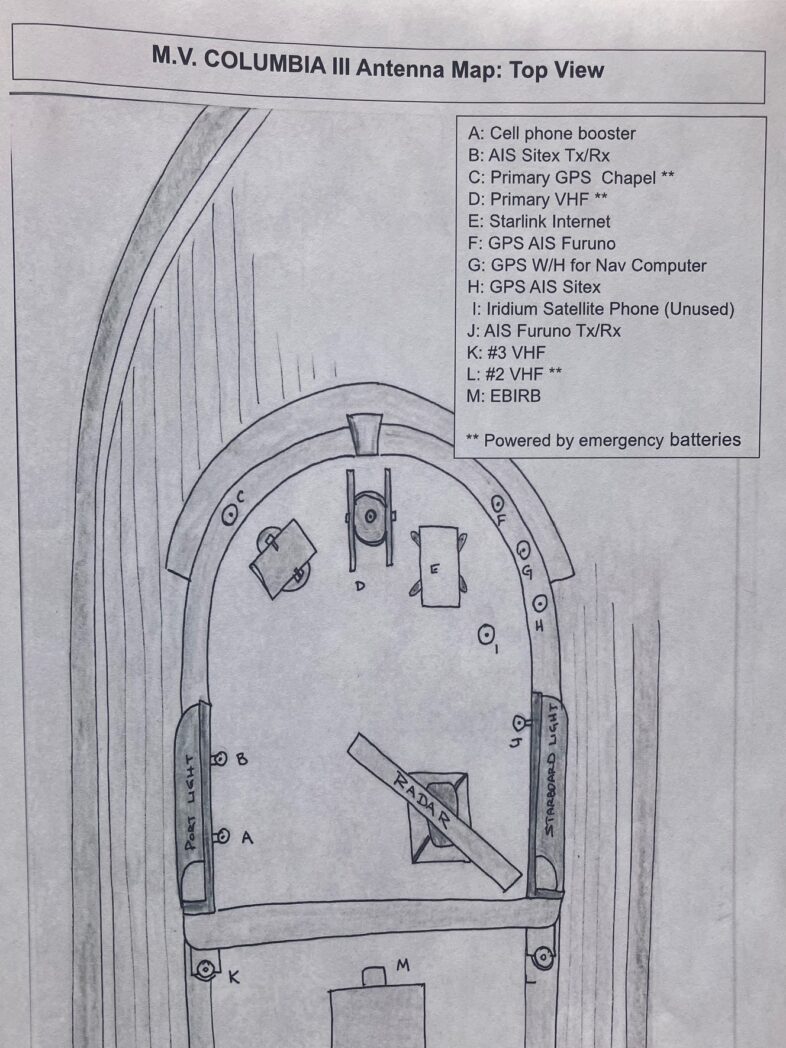
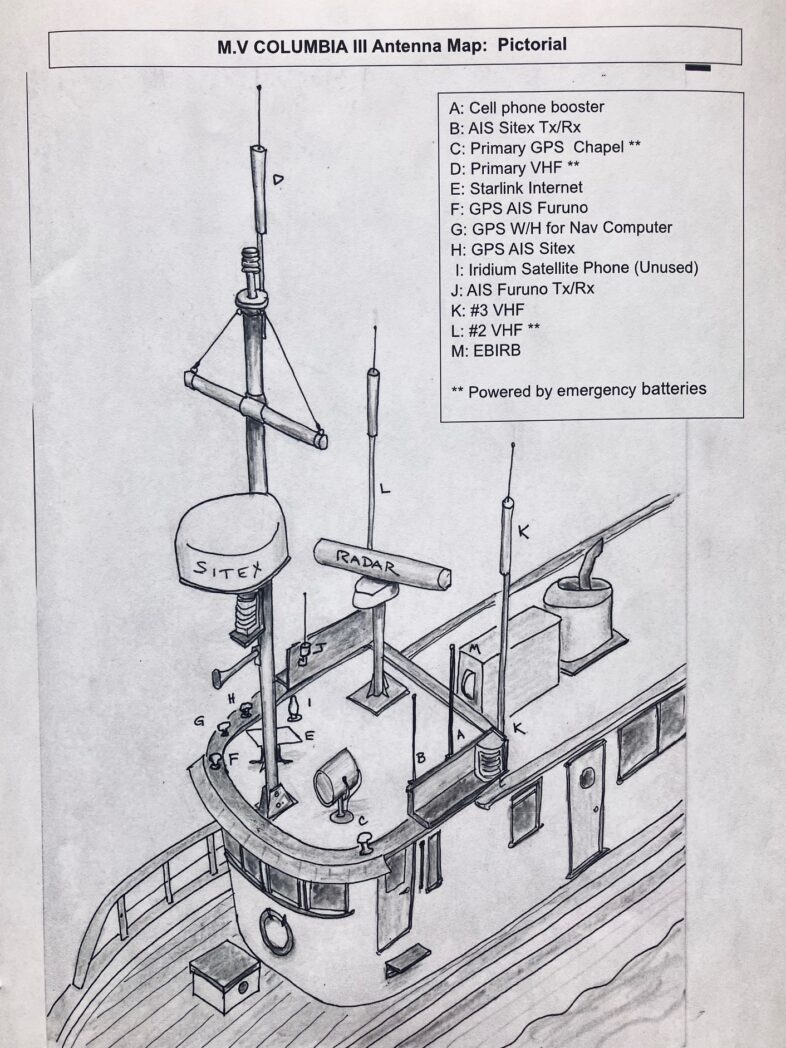
Antenna Map.

I think most of us remember the feeling . . . a university term paper that is assigned months in advance  . . . that hangs, unstarted, in the air all winter, clouding otherwise pleasant moments of respite . . .  and as such, the Canadian Coast Guard Radio inspector asked me to create an “Antenna Map” for the COLUMBIA III and he gave me a year to comply . .

How could 10 months slip by so quickly . . . .

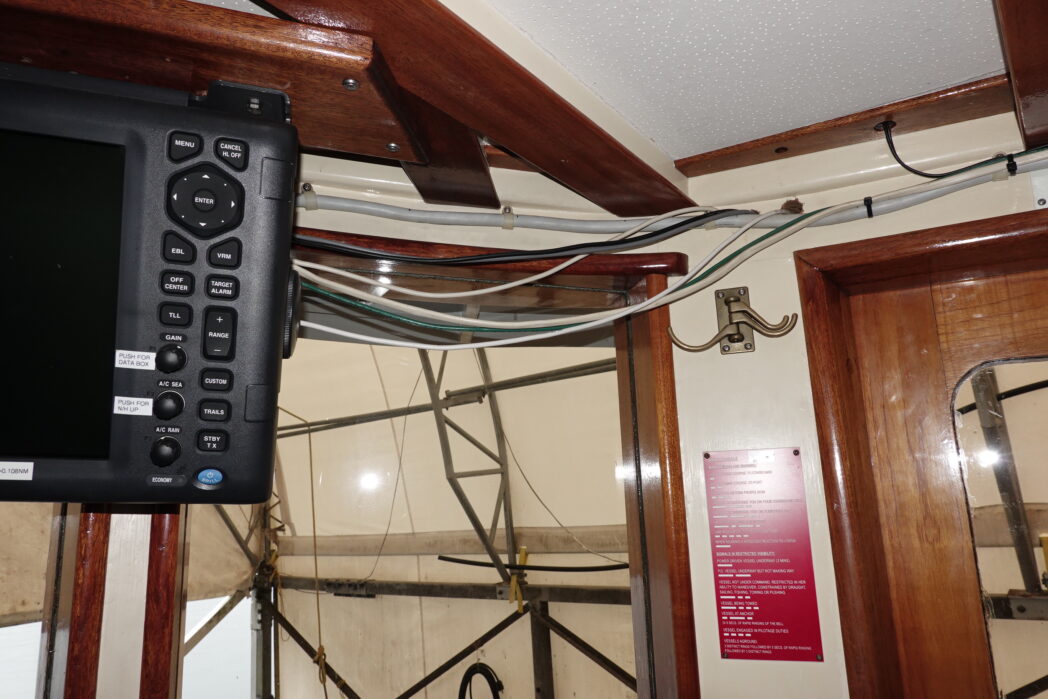
But I do like a challenge, especially if it taxes my paltry drafting skills . . .  Despite the fact that every antenna has installed by me over the years it took quite a bit of reverse engineering to trace each antenna back to its source. As I like a tidy wheel house and my wire bundles are nicely routed and secured, I had to cut most of the cable bundles free of their zap-straps to allow me to connect each electronic unit to its antenna. I figured it out, but now my wheel house looks like someone threw a grenade in the door . . .. .

But I do take pleasure in the results . . .